
The talks will focus on 'delimitation of the border, boundary management and a host of bilateral and international issues'.

The border guarding force is also moving its mechanised column assets like SUVs, all-terrain vehicles, snow scooters and trucks to forward locations in the midst of the projected increase in the number of troops at border units and fresh directives to undertake 'additional' patrols.
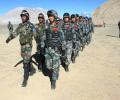
Singh said a meeting between senior Indian and Chinese military leaders has been scheduled for June 6 even as he asserted that India is not going to back off from its position. Asked about the current situation in sensitive areas in eastern Ladakh, he said Chinese have come up to what they claim is their territory while Indians believed it is theirs.
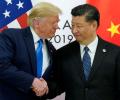
"We are capable of properly resolving the issues between us through dialogue and consultation. We do not need the intervention of the third party", he said.

'We would have faced many more Galwans had Indian troops not reacted and retaliated the way they did.'
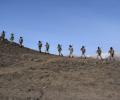
On May 5, around 250 Indian and Chinese army personnel clashed with iron rods, sticks, and even resorted to stone-pelting in Pangong Tso lake area in Eastern Ladakh.

'It has been doing yeoman service for the people of the North East.'
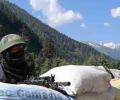
The Army Chief was in Ladakh on a two-day visit from June 23 to take stock of the situation.
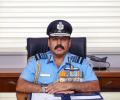
Air Chief Marshal Bhadauria was at the Leh IAF base on Wednesday where he reviewed operational preparedness of the force in effectively guarding the sensitive border areas in eastern Ladakh where Indian and Chinese armies have been on a nearly six-week standoff.
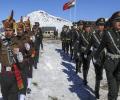
The focus of the deliberations was on finalising modalities for disengagement of troops in eastern Ladakh.

The answer to Chinese tactics of nibbling territory is not defence of every inch -- a military impossibility -- but instead, nibbling at Chinese territory wherever we are in a stronger position, counsels Colonel Anil A Athale (retd).

India on Wednesday delivered a strong message to China that the 'unprecedented' incident in the Galwan Valley will have a 'serious impact' on the bilateral relationship and held the 'pre-meditated' action by Chinese army directly responsible for the violence that left 20 Indian Army personnel dead.
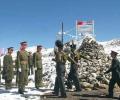
Many of them sustained minor injuries in the clash near Naku La in the Sikkim sector along the Sino-Indo border on Saturday

India has repeatedly called on Russia and Ukraine to return to the path of diplomacy and dialogue and end their ongoing conflict.
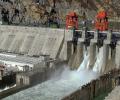
The over 3,800-km-long Brahmaputra, one of the longest rivers in the world passes through China, India and Bangladesh and has several tributaries and sub-tributaries.
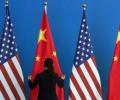
Throughout its standoff with India along the Line of Actual Control (LAC), Chinese officials sought to downplay the severity of the crisis, emphasising Beijing's intent to preserve border stability and prevent the standoff from harming other areas of its bilateral relationship with India, the Pentagon said in a report on Tuesday.

'It is because of the bravery of Colonel Santosh Babu and his men that we have not seen a violent escalation anywhere else along the LAC.'
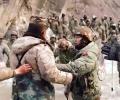
Some may see China's decision to antagonise India as strategically unwise. But China believes its prestige demands standing up to India, whatever the cost.
....a long-term boundary agreement is reached between the two countries.

Tharoor said the Congress should stand up for its foundational principles.
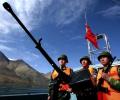
"As far as I know, China presently has not detained any Indian personnel," Chinese foreign ministry spokesman told a media briefing in Beijing while answering questions on the tense standoff between the Indian and Chinese troops at the Galwan Valley.

"Even though the first Sino-Indian war took place in 1962, the Chinese incursion had started taking place in 1957. The government knew it but it did not inform the public. After five decades, the same thing is happening as the Chinese incursion has been taking in Aksai Chin for long, but we have woken up now," said Ram Pradhan, former Union home secretary and former governor of Arunachal Pradesh.

The defence minister also took an indirect dig at Gandhi for "doubting" the government's intention in the handling of the border row with China and said politics can not be done on the basis of "falsehood".
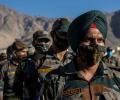
A joint statement released on Thursday said both sides exchanged views in an 'open and constructive' manner to resolve the 'relevant issues' and that it was agreed to maintain 'security and stability' on the ground in the region.
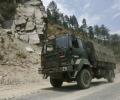
China has reacted cautiously to India's proposal for the establishment of mountain strike corps along the Sino-Indian border, while the official media in Beijing ignored the development.

The army chief said that India needs to broaden its understanding of national security and must examine non-traditional threats like pandemics "de-novo" as they have the potential to inflict severe damage on the country. "We need to act and prepare ourselves accordingly."
The Indian delegation led by Lt General Harinder Singh, the general officer commanding of Leh-based 14 Corps, and Commander of the Tibet Military District Maj Gen Liu Lin held an extensive meeting in Maldo on the Chinese side of the Line of Actual Control in eastern Ladakh on Saturday that began at around 11.30 am and went on till evening.

Amid demands for snapping trade ties with China for its transgressions on the border, former Niti Aayog vice chairman Arvind Panagariya has opined that cutting trade with Beijing at this juncture would amount to sacrificing India's potential economic growth. Instead, Panagariya suggested that India should try to enter into free trade agreements (FTA) with countries such as the UK and the European Union to expand its trade. "Engaging China in a trade war at this juncture will mean sacrificing a considerable part of our potential growth... purely on economic grounds, it will be unwise to take any action in response to it (transgressions on the border)," the eminent economist told PTI.

Former Niti Aayog Vice Chairman Arvind Panagariya has opined that cutting trade with Beijing at this juncture would amount to sacrificing India's potential economic growth.
The process to authorise new battalions for the ITBP, guarding the LAC between India and China, is in the last stage and the government is determined to provide transport and logistical support to all security forces, Union Minister Nityanand Rai said on Sunday.
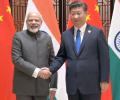
The Chinese and the Indian troops were engaged in a standoff for 73 days in Doklam.

The Army says such a move will seriously jeopardise surveillance over the country's sensitive border with China.

"Our worry is that a small mistake, an accidental exchange of fire at night, might lead to an unintended escalation," a senior officer confessed

China has virtually rejected Prime Minister Narendra Modi's proposal to clarify positions on the Line of Actual Control and said it prefers an agreement with India on a Code of Conduct to maintain peace along the border.

In its first official account of the standoff between the two militaries, the ITBP revealed how its troops "not only effectively used shield to protect themselves but also responded fiercely to advancing PLA (Chinese People's Liberation Army) troops and brought the situation under control". "The ITBP has recommended the names of 21 men who faced the Chinese during the face-offs and skirmishes in May-June this year for gallantry," it said.
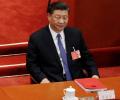
Observers say China should re-address its policies towards India or else it will continue to face flare-ups increasing the tensions between the two countries at a time China's increasing tension with the US over Taiwan and the South China Sea besides the downturn in the Chinese economy which is hit hard by the zero-covid policy.

Newly-appointed Army Chief General Manoj Pande on Sunday said his 'utmost and foremost' priority would be to ensure very high standards of operational preparedness to face current, contemporary and future security challenges across the entire spectrum of conflict.
The 60-metre bridge is around four kilometres east of the confluence of Shyok and Galwan rivers, and links the narrow mountainous region to the Shyok-Daulat Beg Oldi road.

The Indian Army has shown it can face down the PLA, but is too often held back by a political leadership that lacks boldness, asserts Ajai Shukla.
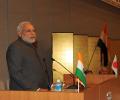
Prime Minister Narendra Modi on Monday deplored the "expansionist" tendency among some countries which "encroach" upon seas of others, in oblique comments against China which has a maritime dispute with Japan.
